AI education product
TeacherZero
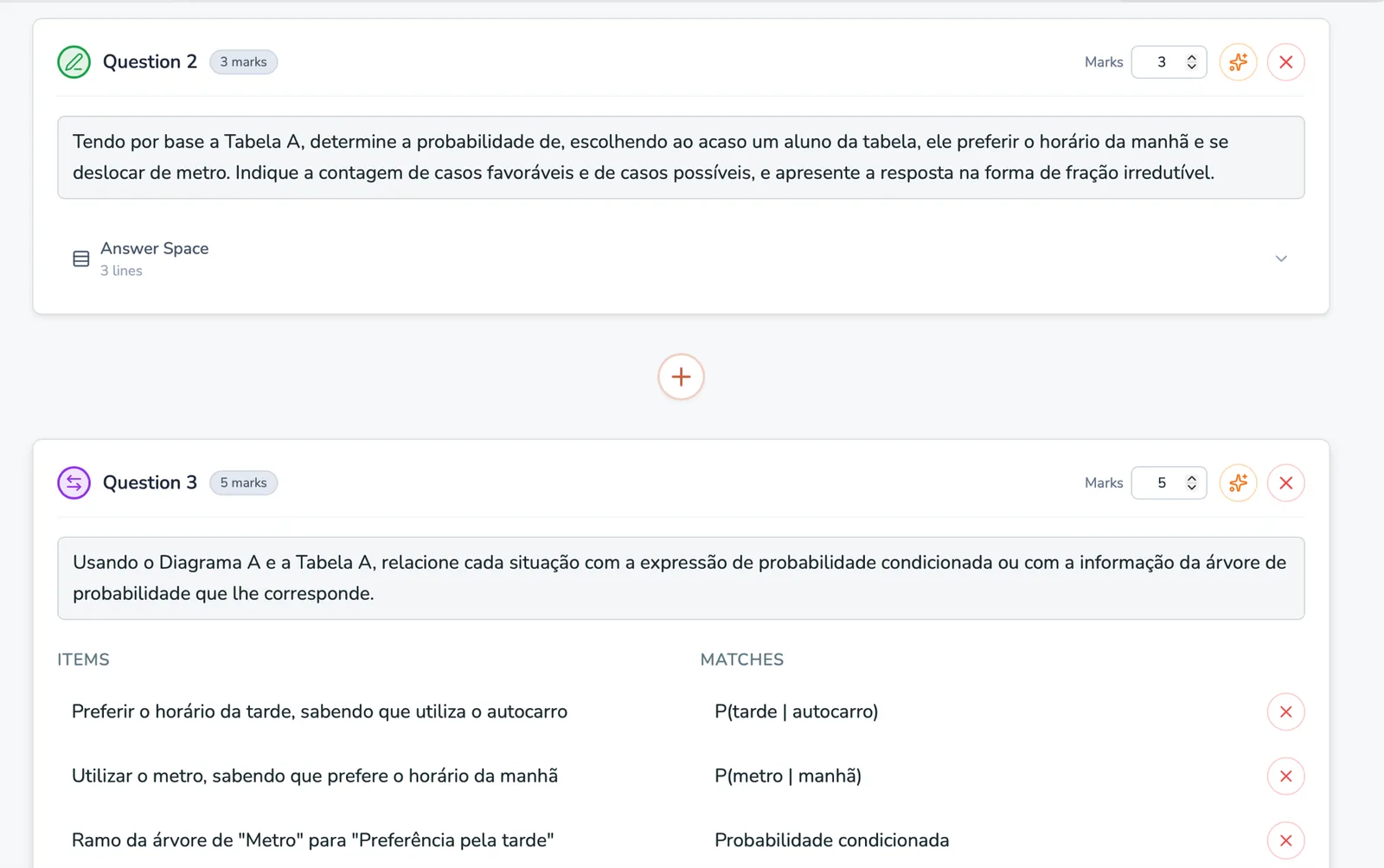
The first generation does not need to be a perfect worksheet. TeacherZero makes it easy for teachers to refine the draft: edit directly, adjust a question’s difficulty, try a variation, and export when it is ready.
- Credit
- Product
- Role
- Product Engineer
- Status
- Investor-demo preparation (June 2026)
- Stack
- ReactViteBunHonoMongoDBClerkOCR
More product screens (3)
The problem
Generating a worksheet is only the starting point. Teachers need the right difficulty for a specific class, wording they would actually use, and questions that match what was taught. TeacherZero drafts a ficha from the teacher's material, then makes it easy to improve individual questions without starting over. The teacher decides when it is ready to assign or print.
My role
I own TeacherZero's product direction and AI features as Product Engineer — the creation wizard, the editor refinement model, and the generation-quality semantics. Other contributors own parts of the frontend and infrastructure, so this case study does not claim I wrote every application layer.
TeacherZero began as an Electron worksheet generator. Its per-question enhancement actions — harder, easier, shift the topic — carried into the later web editor. An early school contract validated demand for the worksheets themselves and informed the product's focus on useful, editable output. That historical milestone is separate from the later platform's commercial status.
From material to worksheet a teacher trusts
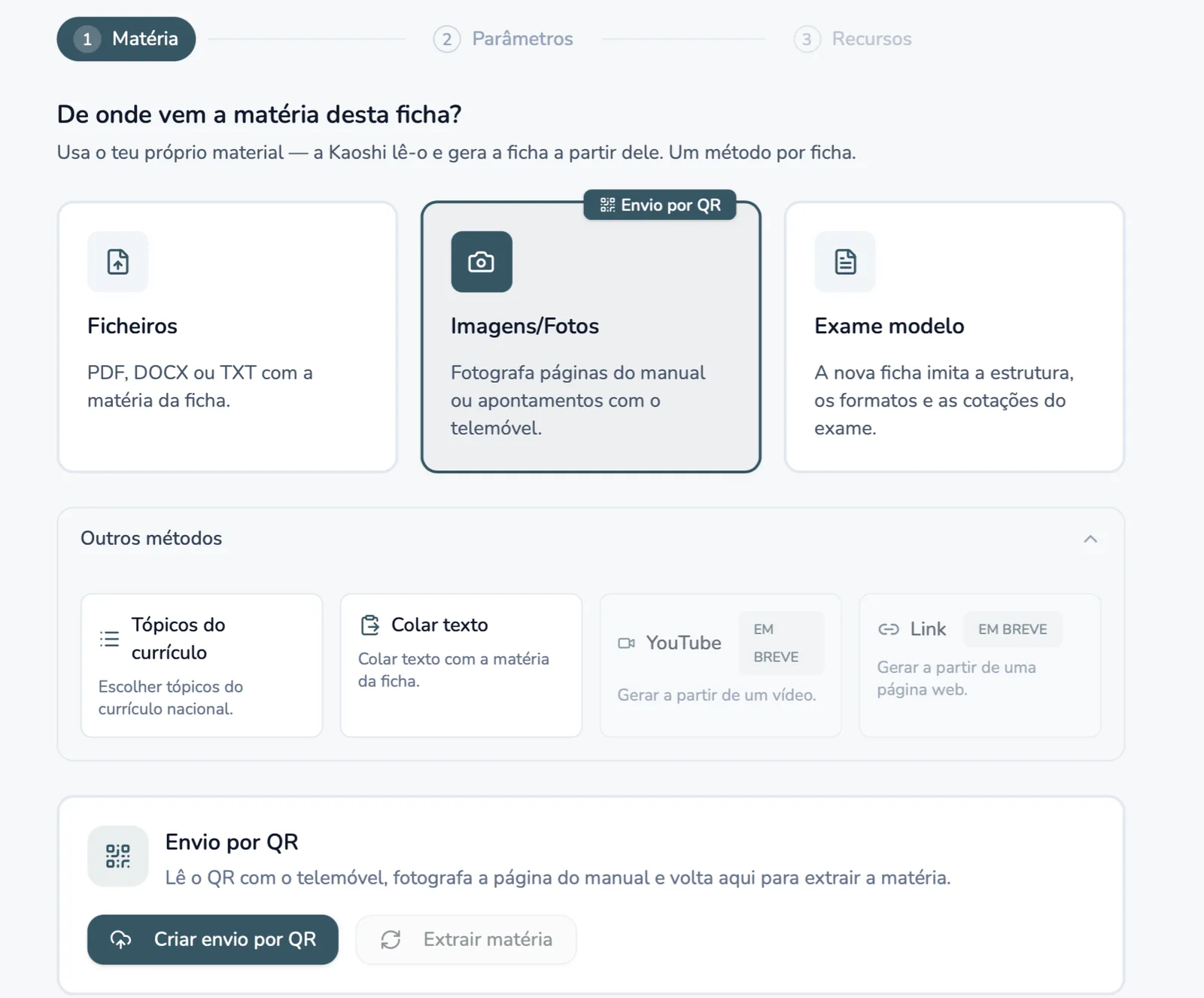
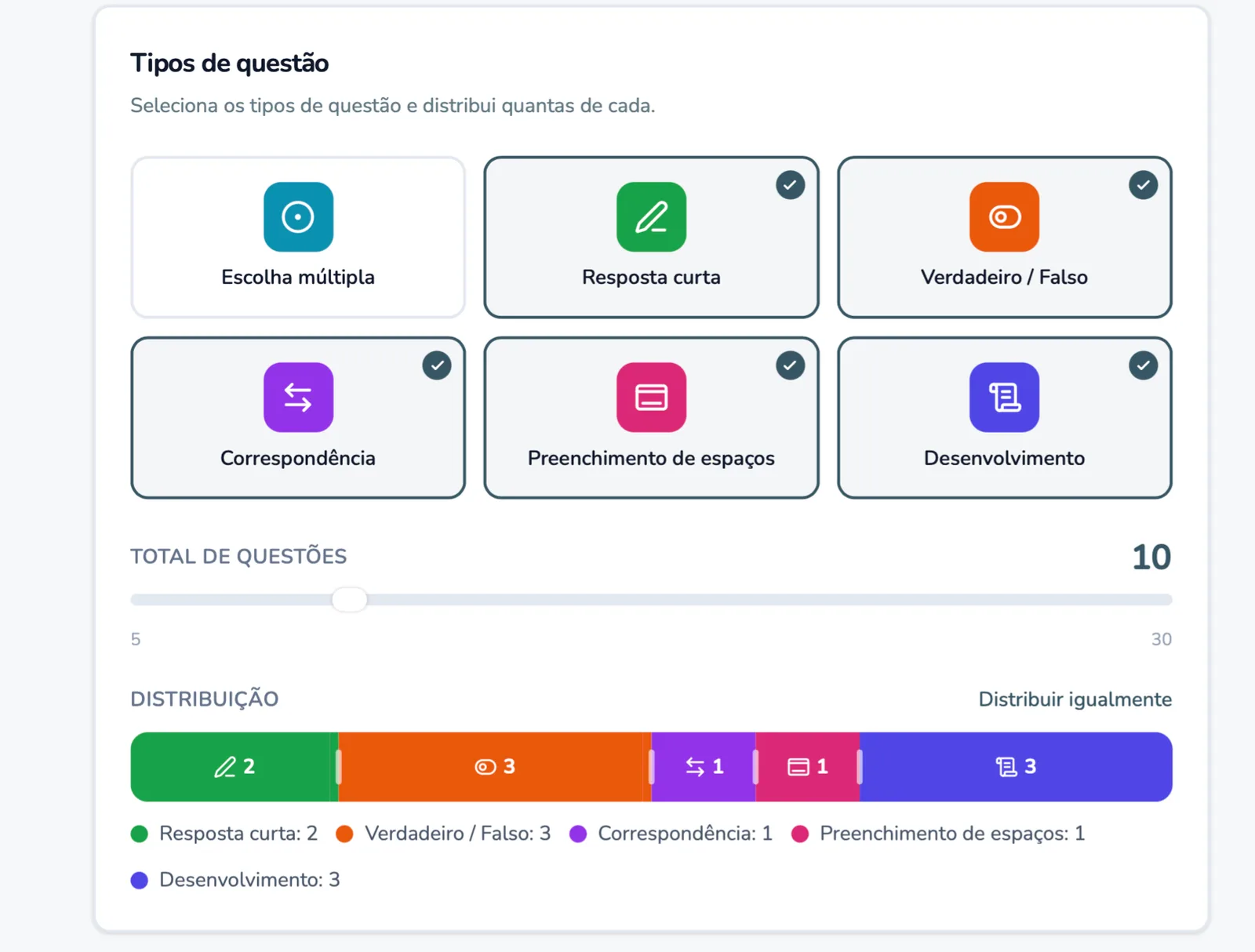
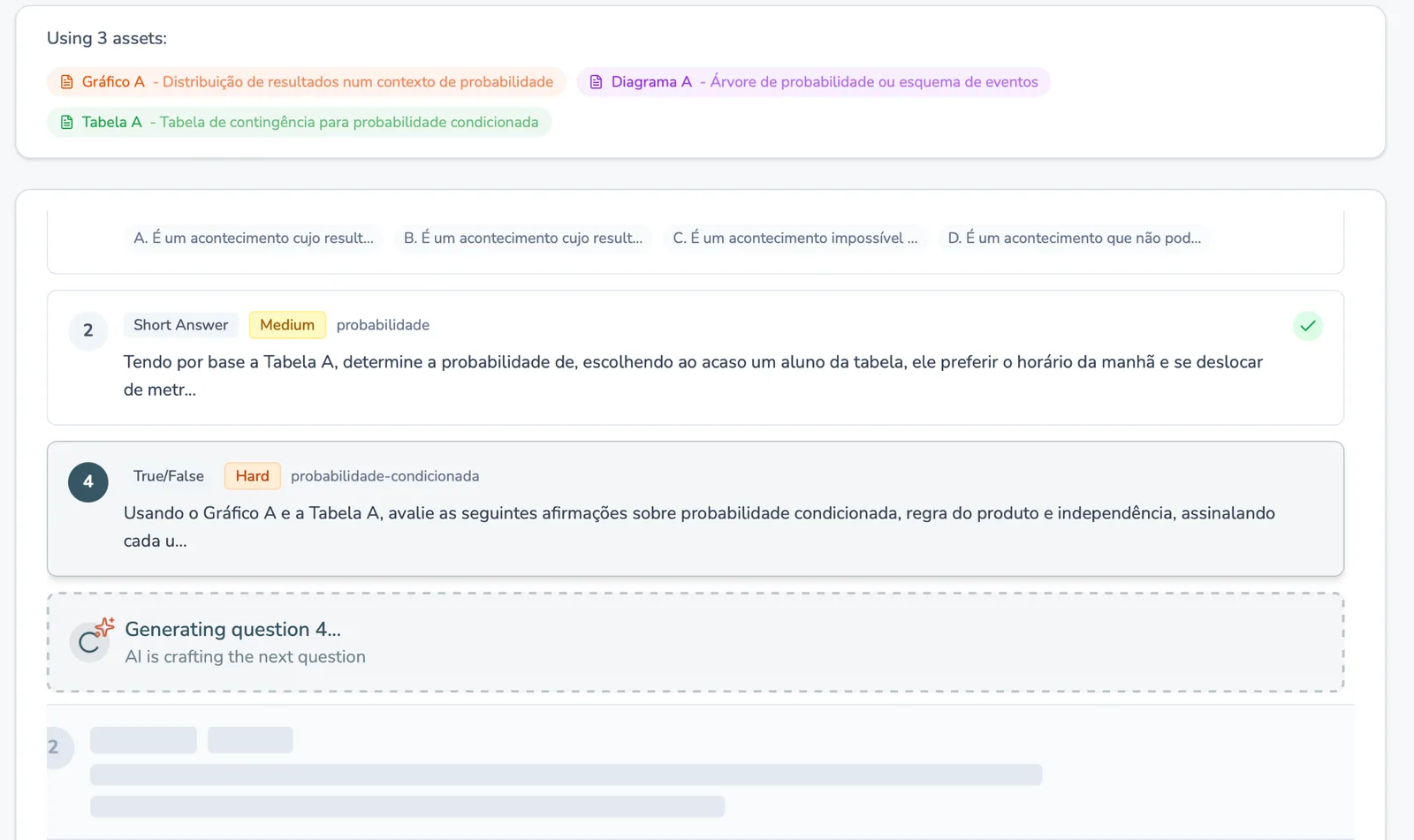
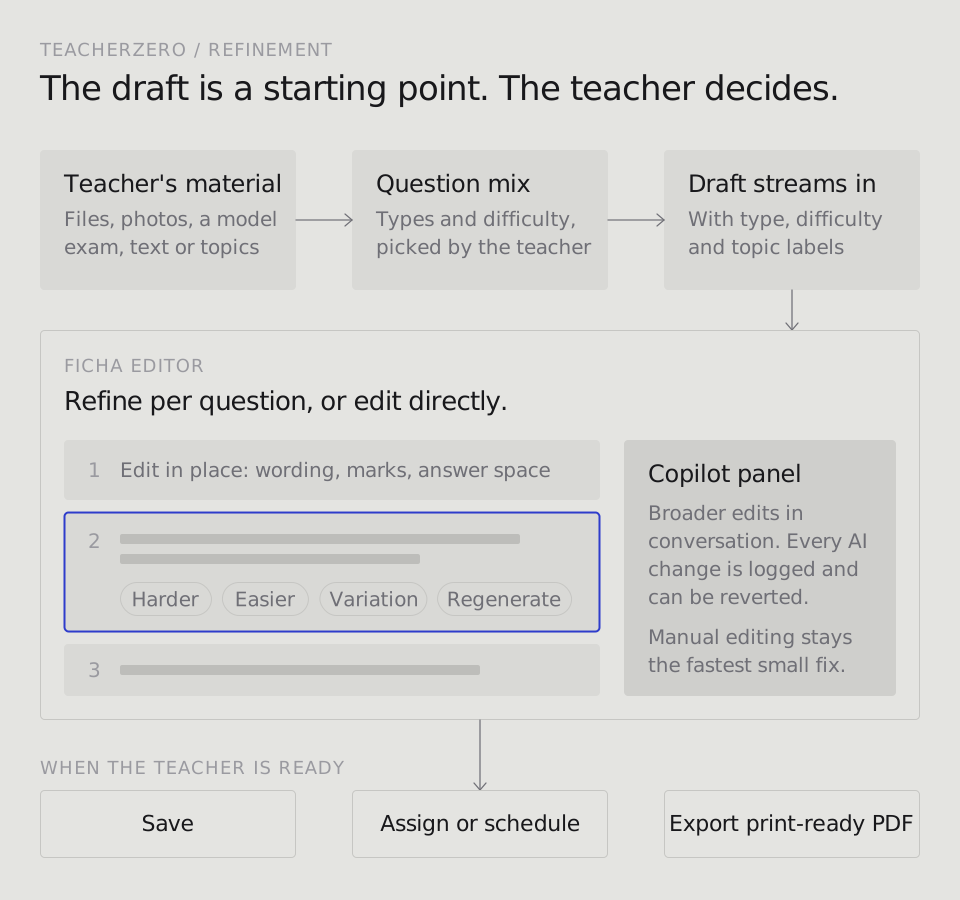
A tutor starts from their own material — files, photos of textbook pages sent by QR, a model exam to imitate, pasted text, or curriculum topics — then picks the question mix and difficulty. Questions stream into a draft with visible type, difficulty, and topic labels, so the teacher can watch the ficha form instead of waiting behind a spinner.
The draft then lands in the ficha editor, which is the heart of the product. Every question is editable in place — wording, marks, answer space, choices — and each carries an AI refine button with quick actions: make it harder, make it easier, produce a different variation, or regenerate it entirely. "Harder" is a pedagogical operation — more abstraction and reasoning demand — not a vocabulary swap. A copilot panel handles broader conversational edits, logs every AI-made change so it can be reverted, and stays deliberately additive: manual editing remains the fastest path for a small correction. When the teacher is satisfied, the exits are explicit: save, assign or schedule to students, or export a print-ready PDF.
Engineering decisions
- Make refinement easier than starting again. Inline edits, per-question AI refinement, reordering, and reversible AI changes let a teacher improve the parts that need work while keeping the rest.
- Treat generation as a reliability problem. Structured outputs, validation before persistence, retries and timeouts, and generation reports that separate a visible content rejection (with a reason and a keep/retry choice) from a recoverable system failure. A partial worksheet is shown as partial — never silently treated as success.
- Pay the reasoning cost once. Answer keys are generated at creation time and reused for cheaper per-submission comparison, so the same ficha a teacher perfected can be graded consistently across a class — including photographed paper submissions via OCR.
- Keep personas honest. Tutors get explicit control and a reviewable artifact; parents and students get a low-configuration practice loop fed by the same fichas. Topic labels are confirmable analytics metadata, not hidden instructions that change what the ficha is about.
Status and boundaries
As of June 2026 the platform was in investor-demo preparation, with the tutor-first paper loop — photograph a manual page, generate, refine, print, grade a photographed answer sheet — as the demonstration spine. The documented implementation covers creation, editing, export, assignments, answer keys, auto-grading, photo OCR, and analytics; demo readiness and frontend polish continued to be worked on. I do not claim current production usage, paid customers, or revenue for the platform.