Agentic engineering · Evaluation infrastructure
BridgeSEO
A multitenant platform that generates SEO articles, audits them across four dimensions, repairs failures in a bounded loop, and makes model cost a measured decision.
- Credit
- Hexa Intelligence
- Role
- Product Engineer / AI Engineer (freelance) · Hexa Intelligence
- Status
- Platform work · February 2026–present
- Evidence
- $0.73 → $0.09 per article
Writer-model comparison on matched briefs, no human-rated quality loss - Stack
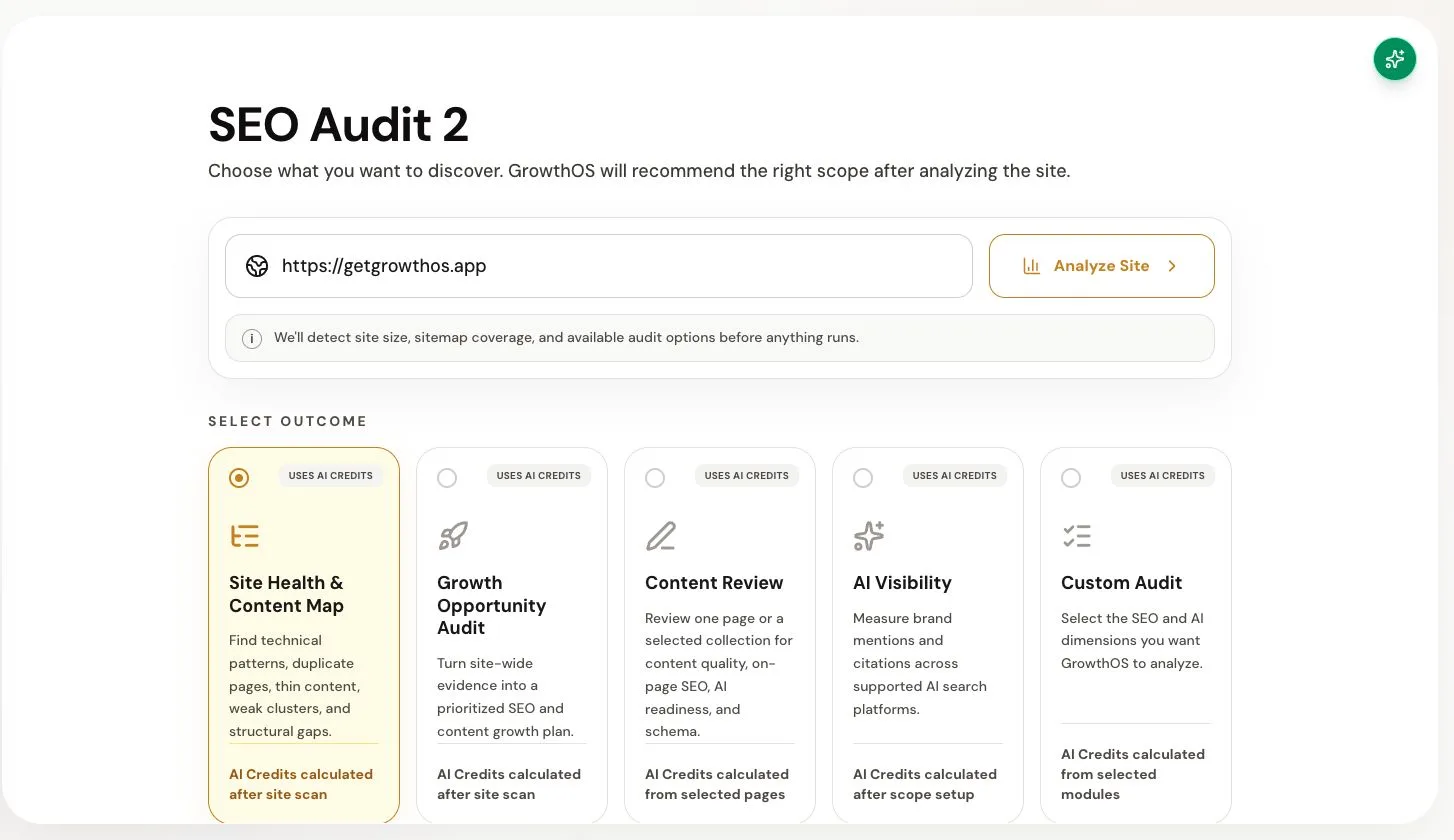
- Multi-model LLM pipelinesEvaluation systemsSupabaseWordPress RESTCost telemetrySocial and image generation
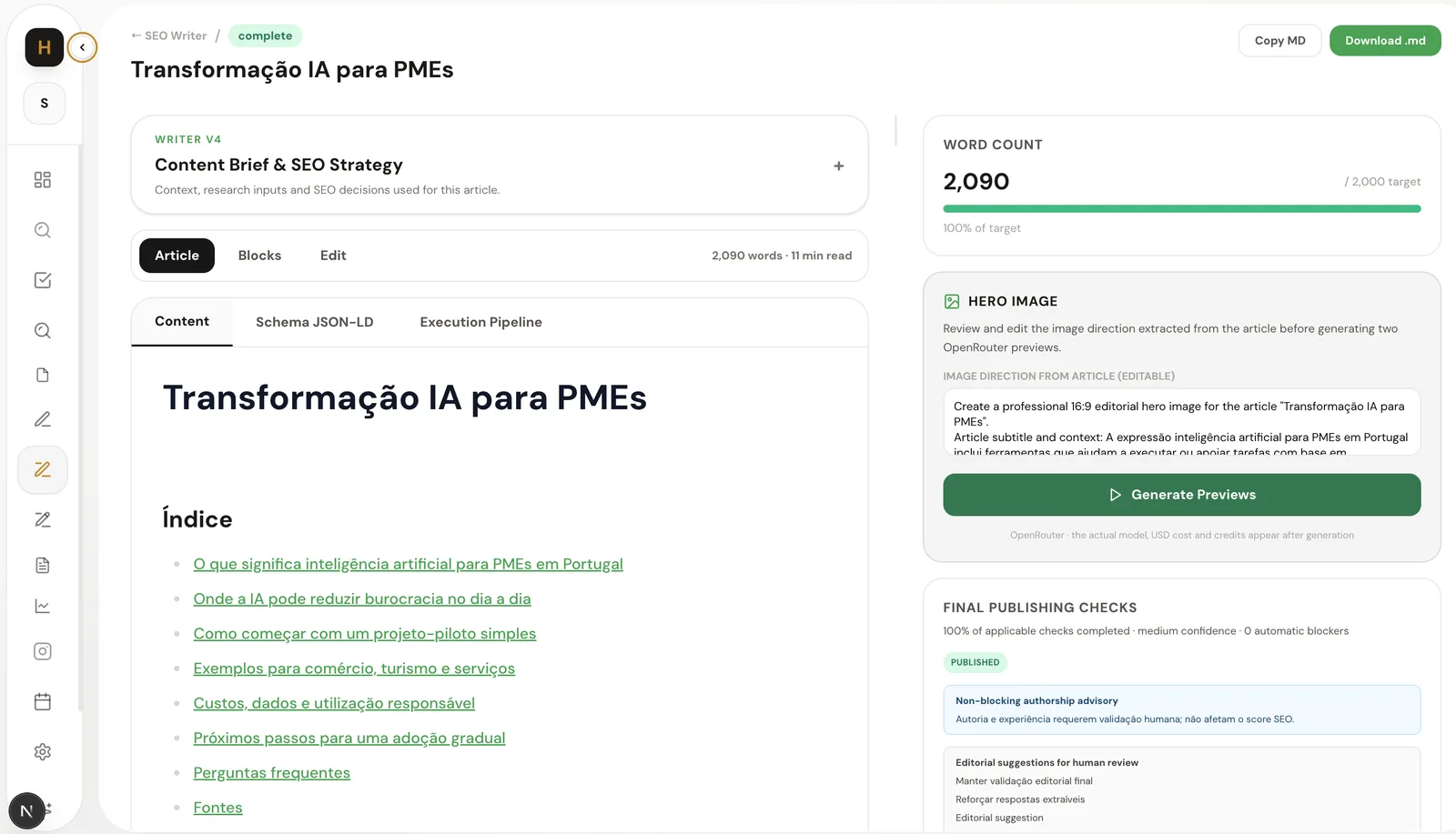
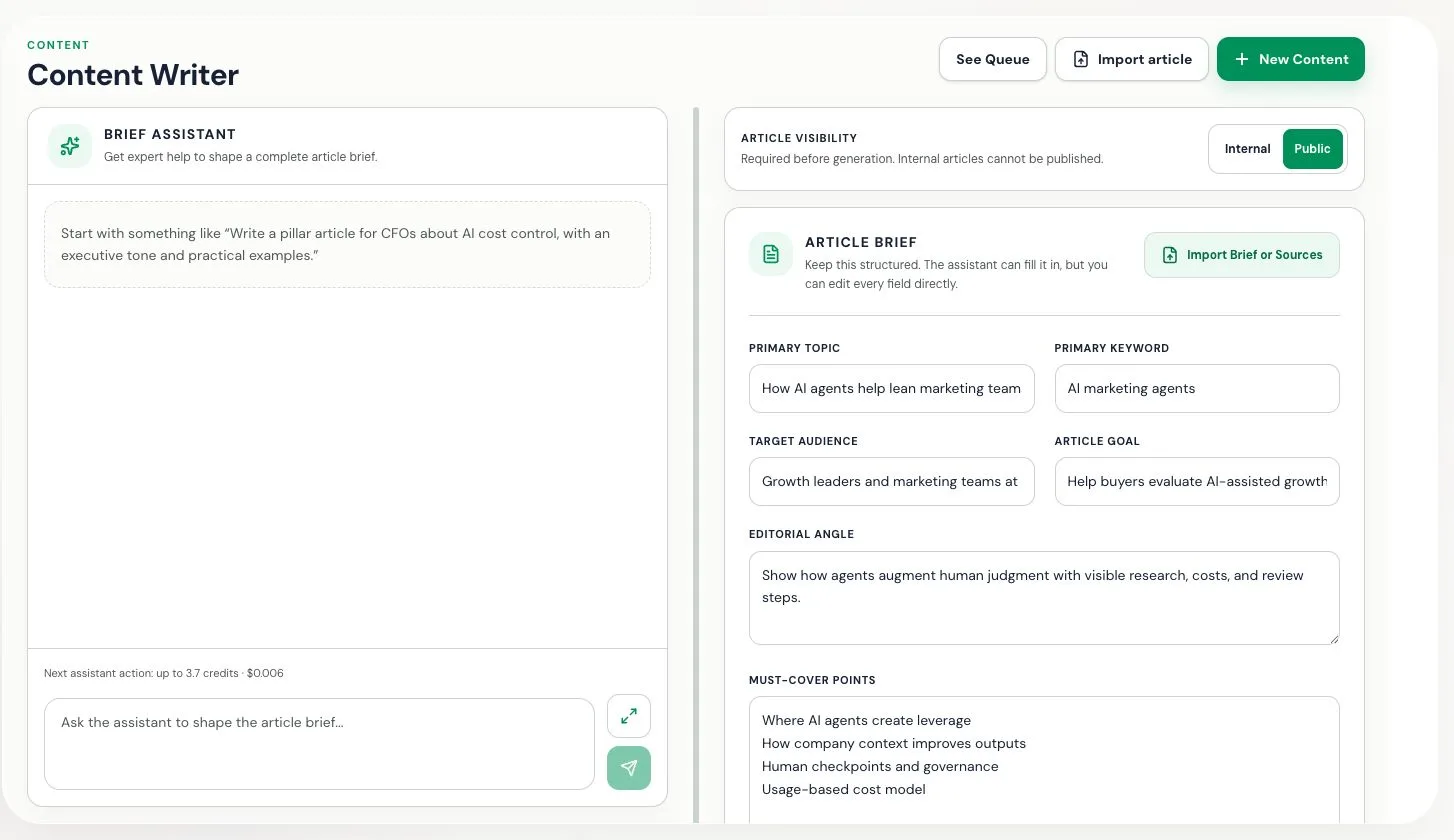
More product screens (2)
Problem
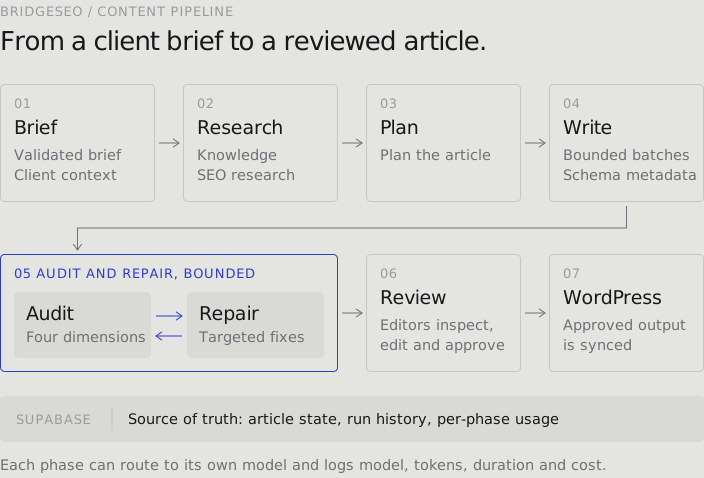
Hexa Intelligence needed to produce SEO content for multiple clients without treating an LLM's first draft as a finished article. BridgeSEO is the answer: a staged pipeline that validates the brief and client context, gathers knowledge and does SEO research, plans the article, writes it in bounded batches, generates schema metadata, audits the result, remediates targeted failures, and syncs approved output to WordPress.
Each phase is independently routable, so research, writing, planning, auditing, and remediation can run on different models instead of forcing one expensive model onto every task. Supabase is the source of truth; WordPress is the publishing layer.
Role and ownership
As a freelance Product Engineer / AI Engineer I owned architecture, implementation, model and pipeline choices, evaluation instrumentation, reliability fixes, deployment, and technical communication with Hexa leadership — turning broad requirements into bounded pipeline phases and reviewable product behavior.
Engineering decisions
- Compose the pipeline from inspectable phases. Brief validation, research, planning, section writing, audit, remediation, schema, and publishing each carry their own model routing, progress, and telemetry rather than one opaque completion.
- Audit across four dimensions. Content/E-E-A-T, GEO/AI visibility, on-page SEO, and schema are scored separately so a single opaque number cannot hide a structural or editorial failure.
- Make repair safe. Word-count floors, empty-section checks, structured-output hardening, phase-aware timeout budgets, bounded retries, content-loss protection, and actual-served-model attribution keep a malformed completion or silent provider fallback from being marked successful.
- Treat model choice as an evidence problem. Per-phase usage events record model, tokens, duration, and cost, so routing and billing decisions are testable rather than assumed from a headline price.
Evaluation and result
An evaluation group ran the same brief through multiple model configurations and displayed comparable outputs with quality scores, word count, latency, tokens, and cost. That like-for-like comparison reduced measured per-article generation cost from $0.73 to $0.09 with no human-rated quality loss — a result of instrumenting the workflow and comparing matched runs, not of swapping a model and assuming quality held. The figure is scoped to that writer-model comparison, not a claim about the whole pipeline's price.
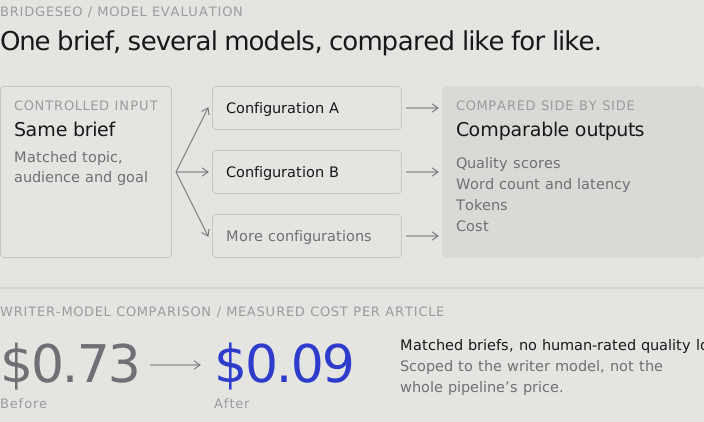
The same telemetry answered practical questions in production: which phase spent money, which model actually served the request after fallback, and whether a cheaper run still produced a usable article.
Status and boundaries
BridgeSEO is freelance platform work for Hexa Intelligence, ongoing since February 2026. It is distinct from my earlier Hexa internship — which built a health-content portal and the Carglass migration — and from the separate Santander Content Accuracy Monitor delivered through the same company. The platform later extended into social planning and image workflows; those are described as implemented work exercised on staging, not blanket production claims. The system prepares and routes work for editorial review rather than replacing it.